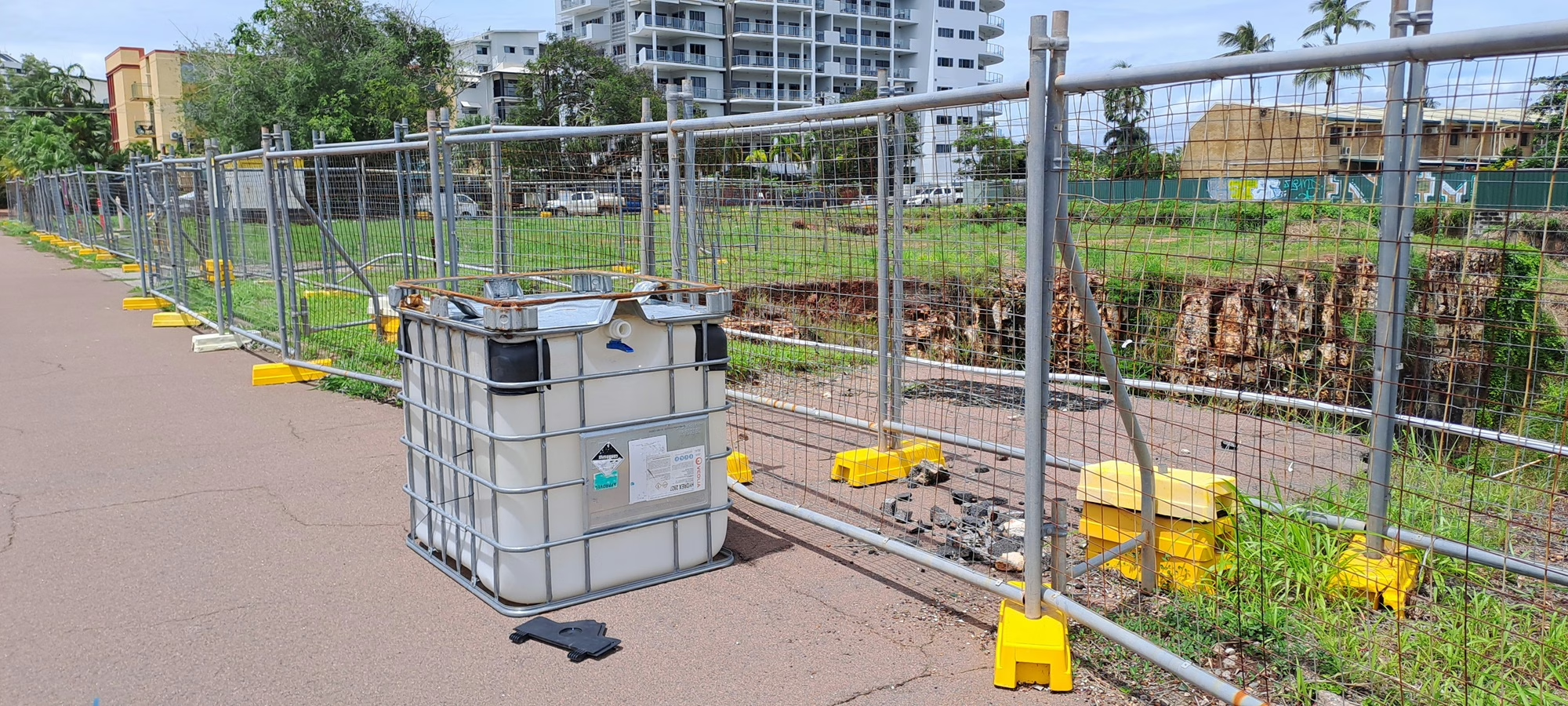
In a recent interview with ABC Radio Darwin’s Jess Ong, PLan Convener Nick Kirlew addressed a growing concern for residents and visitors alike: the long-term vacant lots and “pits” scattered across the CBD. From the infamous “big hole” on Mitchell Street to the 24-year-old Asti Motel site on Smith Street, these stagnant spaces are more than just eyesores—they are missed opportunities for a vibrant city.
The conversation explores the reality of “land banking,” the public safety risks of temporary fencing, and a wishlist for a government-led process to activate these assets. Whether it’s through tiered rent incentives for small businesses or a formal requirement for street appeal, the message is clear: Darwin deserves better than a city full of dead spots.
Three Key Takeaways from the Interview
- The Problem of “The Pits”: Long-term vacant sites, like the Asti Motel pit, have remained stagnant for over two decades, often filling with water and creating safety hazards.
- Activating Empty Shops: Rather than waiting for the “right price,” landlords should be encouraged to offer staggered rent (e.g., three months free) to help new local businesses find their footing and activate street fronts.
- The Need for a “Gazetted Plan”: It is time for a coordinated effort between owners, the community, and the government to ensure that “holding on for the grandchildren” doesn’t hold back the entire city’s progress.
Transcript: ABC Radio Darwin – March 19, 2026
Jess Ong: Okay, so I’ve been talking about the “big hole” on Mitchell Street as part of the Rumour Mill. Someone who might have some insight, or a wishlist potentially for what they would like to see put in this big hole in its place, is Nick Kirlew, who is from the Planning Action Network. Good morning, Nick.
Nick Kirlew: Morning, Jess. Good morning, listeners.
Jess Ong: So, you know the big hole I’m talking about on Mitchell Street? It’s been there for a really long time. What would you like to see there instead of the… liters of water that are currently filling it?
Nick Kirlew: Yes, Jess. I too have one of those. I’m on Smith Street—the Asti Motel site is another 24-year-old “pit” or “hole.” It fills with water; it’s got a horrible temporary fence. What can we do with these sites? If I go to the DCA [Development Consent Authority], they say “Oh, they’re land banking,” and the DCA will say, “You can’t use that term.” So apparently the owners of these blocks of land are not holding on to them for the future, but I think that’s really what we see.
Jess Ong: So what are they holding on to them for then?
Nick Kirlew: Well, I guess for the price to become what they want to see. The price is right—is that a term we can use? We could. So if you go more generally into the city, there are all those empty shops where people are holding, waiting. And I always think of the Newcastle example where if things are empty and no one’s using them, look for some alternate way of filling them. So in the shops, we could rent them to people who want to start businesses. We could give them free rent for three months and then half rent for six months, and if the business is still standing, hey presto, you’ve activated your area. But the blocks of land—what can we do?
A while back, I can’t remember which level of government decided to make things look pretty, and they put a tax on people who had empty blocks in town. And people will remember those fences going up with the patterns printed on the nylon, and then there was one guy who put pot plants in. And then the cyclone or the big storm came and broke them all up. And now the city does look very tired, and these blocks of land are a real eyesore. I suspect that somewhere, someone should be asked to make good or ask the owners to give us back a bit of street appeal.
Jess Ong: Yeah, because that’s the thing. The big hole on Mitchell Street has been sat there for a really long time. It was owned by the City of Darwin; they then sold it to a developer and, you know, not much has happened since then. So you reckon there should be a time limit on how long you can just sit on this land—especially in the middle of the CBD as well—before something needs to happen?
Nick Kirlew: I’m sure they do that in other cities. I’m sure if you read the narratives about Brisbane, there are controversial blocks where people are pushing and the councils or the local governments are saying “This has to be activated.” When you started talking about this a week or so ago, people—I remember reading—they were saying, “Yeah, well we go to that bar and the mosquitoes are biting us.” I fear for these holes in the ground. I hate them when they’re full of water. The one I have at the Asti Motel has the same temporary fence it had 24 years ago. So it’s just horrible—the risk. I think that that’s a public safety issue, and I’ve been on to WorkHealth and Safety a few times in regards to the Asti site. They leave the gates open and there’s things leaning against the fence. I think we can ask for better, but I’m not sure I know the solution.
Jess Ong: Well, if you had a wishlist, Nick—you know, I have been talking about the “Fuel Tsar” today because that is what Anthony Albanese is taking to the National Cabinet this morning to try and appoint someone to oversee the fuel crisis—I feel like you might be the “Planning Prince.” Could we nominate you as that?
Nick Kirlew: Well, I guess princes are allowed to be very old in this world. Yes.
Jess Ong: So if you had a wishlist, what would you chuck in there?
Nick Kirlew: Oh, wow. I’d chuck in a community/government/owner process that started at level one, which is: “Okay, you have this asset. You have this amazing asset in our amazing city, but by trying to leave it to your grandchildren, you’re actually holding us all back.” And maybe we can take that line—it’s the “castle” thing, isn’t it? They worked hard to get the block of land and they have every right to do what they want with it. But the flip side of it is we all want Darwin to look and be a better place for people to move to and to be an attractive city, not a city full of these dead spots.
One point I’d make is that block that just sold across the road from the Shell petrol station. They did try. They tried the markets in there; they had a two or three different goes at activating the site. But it’s very hard to create something from nothing. That’s maybe where we should be starting—is to actually get all the players together and then gazette a plan, not just go, “Oh well, we talked.”
Jess Ong: All right, well that is why you are the Planning Prince. I am appointing you the Planning Prince today, Nick. Take that with you this morning.
Nick Kirlew: Well, I’m in a good mood now.
Jess Ong: Really good to talk to you. Thanks, Nick. Nick Kirlew from the Planning Action Network talking about what he’d like to see for that big pit that is on Mitchell Street.
You have been coming forward with all of your ideas. Someone saying a “Japanese garden,” says Will. Paul was saying a “Singapore-style building” with ground-level arcades, a below-ground level food court as well with two levels of small shops and two levels of big shops, with an emphasis on low rent for small shopfronts so it becomes the place to go for specialty and niche stuff. Someone else saying we may as well just make it a public pool, an aquatic center at this point, says Pete. And Pat says nothing—just add some sand and a swim-up bar and we’re winning.
So, that big pit on Mitchell Street—there’s a few of them around, as you heard Nick mention there, one on Smith Street as well where the old Asti Motel used to be. So maybe causing a little bit of a public safety issue as well, especially that one on Smith Street with its temporary fencing.